
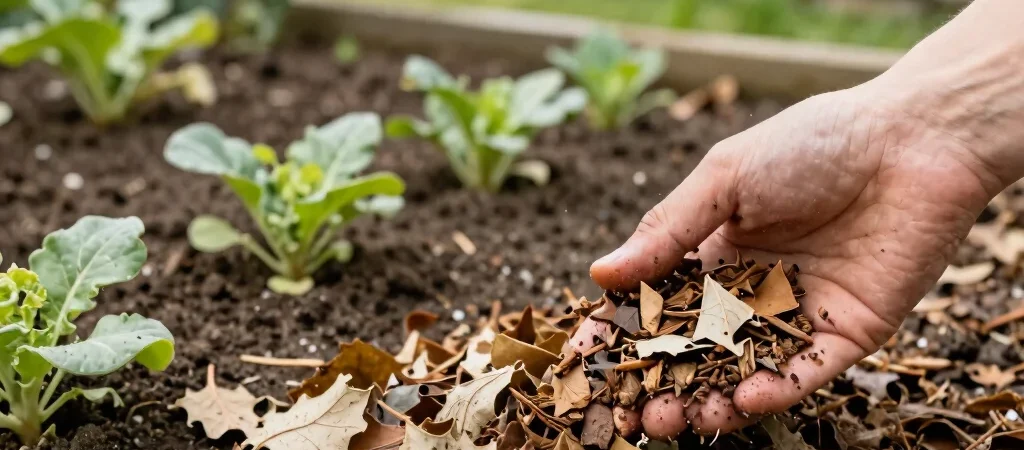
On a breezy, rain-prone plot, bare soil can lose moisture between showers and wash or blow from exposed surfaces. Mulch helps shield the ground, but it is not a universal fix. The material, timing, and thickness should suit the soil, the plants, and how quickly water already drains.
Check the soil before covering
Look at the bed after rain: does water soak in, run across the surface, or remain in a low spot? If the ground is saturated, adding a dense layer may slow drying at the surface. Where drainage is uncertain, start with a small area and observe it through changing weather rather than covering every bed at once.
A loose organic mulch can reduce direct exposure and gradually contribute organic matter as it breaks down. Straw, leaves, and mature compost behave differently, so choose a material that fits the planting and the purpose. Keep material away from plant crowns and stems, where prolonged dampness can cause trouble.
Match the cover to the job
For an established vegetable bed, a light cover may help protect the surface between crops; around young seedlings, leave enough open ground for them to establish. On paths, a different material may be more practical than in a planting row. There is no single thickness that fits every soil and season.
Living ground cover is another option where the timing and crop rotation allow it. It protects the surface while growing, but it also uses water and nutrients, so its management matters. On cultivated land, the right choice depends on the crop, local conditions, and the period when the soil would otherwise be exposed.
Watch what changes
After applying a cover, check moisture beneath it and watch for pooling, slugs, or plants struggling to emerge. Adjust or pull back the material if the bed stays too wet or the crop needs more light and warmth. For broader guidance on cover crops and soil protection, consult resources from INRAE and local agricultural advisers, then adapt them to your soil and use.