After a wet spell in Brittany, one garden bed may stay tacky while another dries enough to work within a day. Texture is part of that difference: it describes the relative amounts of sand, silt, and clay. But a texture label is a starting point, not a verdict on how a particular plot will behave.
Start with feel and structure
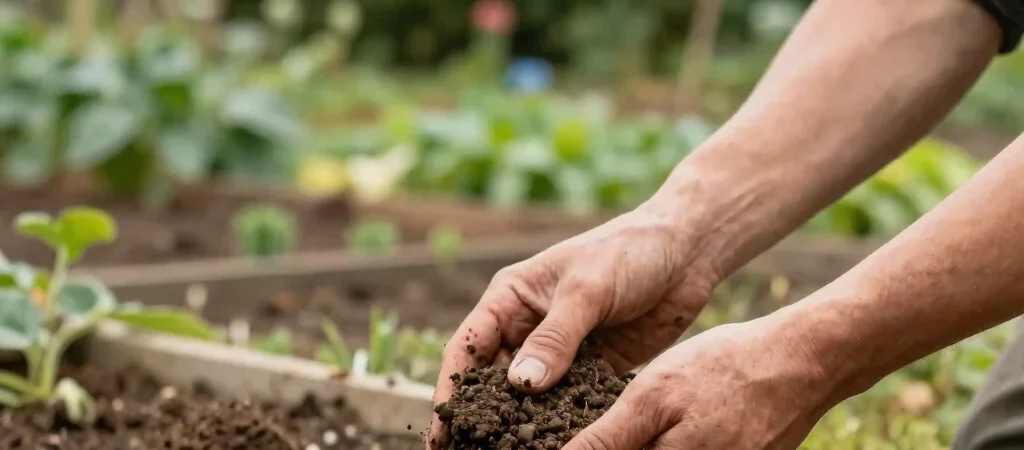
Moisten a small pinch of soil and rub it between your fingers. Grit suggests sand; a smoother, floury feel can suggest silt; soil that holds together and forms a pliable ribbon may contain more clay. This simple field check is approximate, and stones, organic matter, and moisture all affect what you feel.
Texture is different from structure. Structure describes how soil particles gather into aggregates and the spaces between them, where air and water move. A clay-rich soil with stable aggregates can behave very differently from one that has been worked when wet and compressed.
Read the place around it
Look at the ground after rain rather than relying on a single handful. Note where water lingers, where it runs off, and whether the surface crusts or stays open; also notice slopes, hedgerows, and any compacted paths. These observations describe this site and its current use, not every soil in the region.
Brittany’s soils reflect varied geology, landscape position, and land management. For regional context, GIS Sol provides information on soils in France, while BRGM geological maps help explain the underlying materials. Neither replaces a closer look at your own garden or field.
Choose the next useful check
If you are deciding whether to dig, plant, or improve a bed, combine texture observations with drainage, rooting depth, and the soil’s history. If a decision depends on nutrient levels or acidity, arrange an analysis suited to that purpose instead of guessing from feel alone. Sols de Bretagne is an independent magazine, not an official soil program or scientific institute; we explain concepts and point readers toward sources they can check.